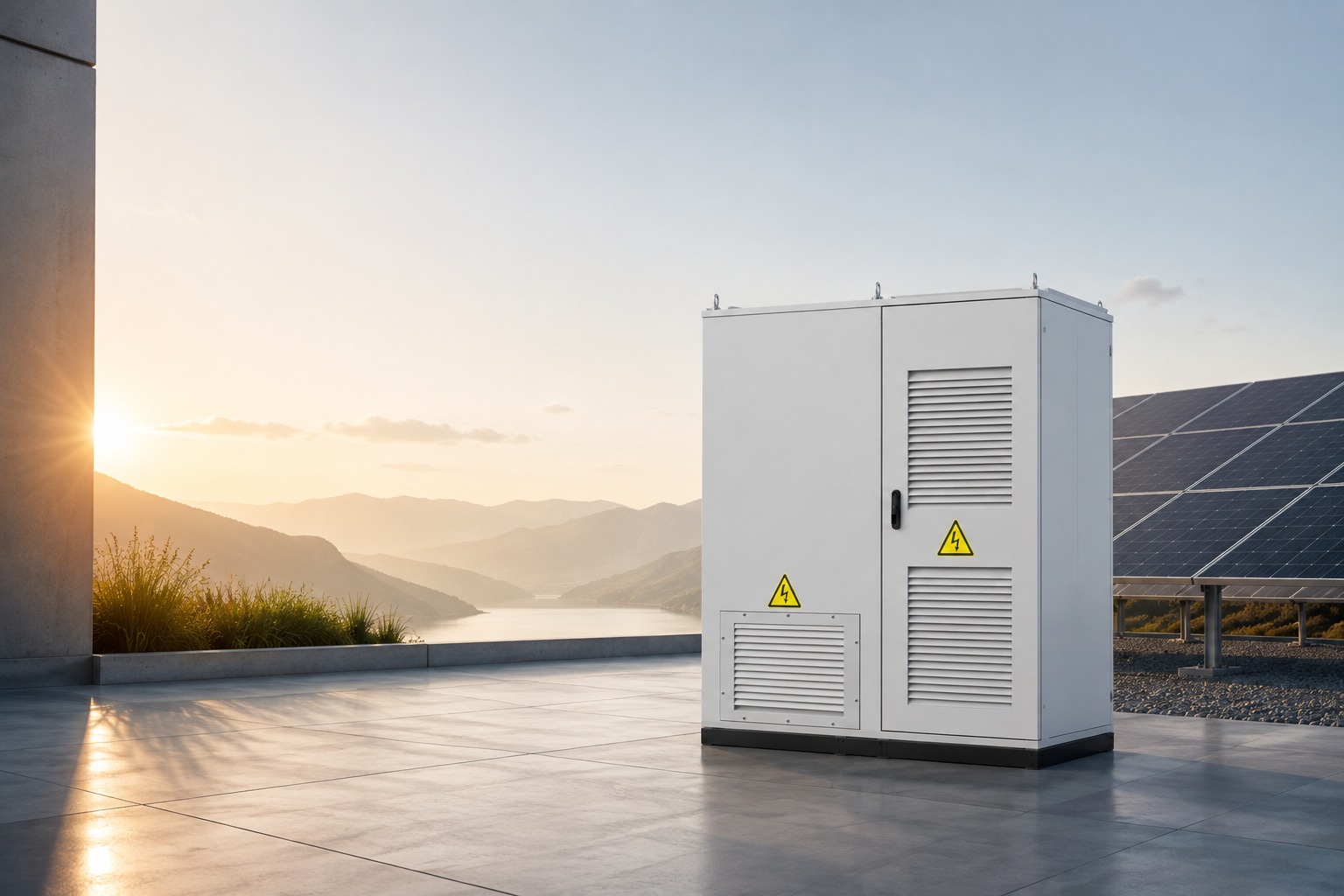
As electricity prices continue to fluctuate and renewable energy adoption accelerates worldwide, Battery Energy Storage Systems (BESS) have become one of the fastest-growing technologies in the energy industry. From commercial buildings and factories to utility-scale solar farms, businesses are increasingly investing in battery storage to reduce operating costs, improve energy independence, and enhance grid reliability.
In this article, we’ll explore why BESS is becoming an essential part of modern energy infrastructure and how integrated solar and storage solutions create long-term value.
What Is a Battery Energy Storage System (BESS)?
A Battery Energy Storage System (BESS) stores electrical energy in rechargeable lithium batteries and releases it when electricity is needed.
A complete BESS typically consists of:
- Lithium battery packs
- Battery Management System (BMS)
- Power Conversion System (PCS)
- Energy Management System (EMS)
- Thermal management system
- Fire suppression system
- Monitoring platform
By intelligently managing energy generation and consumption, a BESS helps maximize the value of renewable energy while improving power reliability.
Why Battery Storage Is Growing Rapidly
Several global trends are driving the rapid adoption of energy storage systems.
Rising Electricity Costs
Many countries are experiencing increasing electricity prices. Businesses can reduce peak demand charges by charging batteries during off-peak hours and discharging them when electricity prices are highest.
Expansion of Renewable Energy
Solar and wind power are intermittent energy sources. Battery storage smooths fluctuations and allows renewable energy to be used even when the sun isn’t shining or the wind isn’t blowing.
Grid Stability
Many utilities now encourage or require energy storage to improve grid stability, reduce congestion, and support frequency regulation.
Energy Independence
Companies are looking for greater control over their energy supply, reducing dependence on unstable grid conditions.
Benefits of Commercial & Industrial Energy Storage
Commercial and industrial (C&I) energy storage offers multiple advantages for businesses.
Peak Shaving
Battery systems discharge during periods of high electricity demand, reducing expensive peak demand charges.
Backup Power
Energy storage provides reliable backup power during outages, helping critical operations continue without interruption.
Improved Solar Utilization
Instead of exporting excess solar energy to the grid at low prices, businesses can store it for later use, significantly increasing self-consumption.
Lower Operating Costs
By optimizing energy usage and reducing reliance on expensive grid electricity, battery storage delivers measurable long-term savings.
ESG and Sustainability
Installing solar and battery storage helps companies reduce carbon emissions while supporting environmental and sustainability goals.
Choosing the Right Battery Technology
Lithium Iron Phosphate (LiFePO₄) batteries have become the preferred technology for modern energy storage because they offer:
- High safety
- Long cycle life
- Excellent thermal stability
- Low maintenance
- High efficiency
- Long service life
For most commercial and residential applications, LiFePO₄ provides an excellent balance of safety, performance, and total cost of ownership.
Integrated Solar and Storage Solutions
Rather than purchasing individual components separately, many EPC companies and distributors now prefer integrated solar and storage solutions.
A complete solution may include:
- Solar PV modules
- Hybrid or grid-tied inverters
- Battery energy storage systems
- Mounting structures
- Monitoring software
- Engineering support
- Technical documentation
- After-sales service
Integrated solutions simplify procurement, reduce compatibility issues, and shorten project implementation time.
Key Considerations Before Investing in BESS
Before selecting an energy storage system, businesses should evaluate several factors:
- Daily energy consumption
- Peak demand profile
- Backup power requirements
- Available installation space
- Local electricity tariffs
- Solar generation capacity
- Future expansion plans
Proper system sizing is critical to achieving the best return on investment.
The Future of Energy Storage
Industry analysts expect global energy storage installations to continue growing rapidly over the coming decade. As battery costs decline and renewable energy penetration increases, battery storage will become a standard component of modern power systems.
For businesses seeking lower electricity costs, improved energy resilience, and greater sustainability, investing in a Battery Energy Storage System is no longer just an option—it’s becoming a strategic necessity.
Why Choose Vansenergy?
Vansenergy provides integrated photovoltaic and energy storage solutions for residential, commercial, and industrial applications. Our product portfolio includes lithium battery storage systems, commercial ESS cabinets, containerized energy storage systems, hybrid inverters, solar modules, and complete PV + ESS solutions.
From system design and product integration to logistics and technical support, we help partners build reliable and cost-effective energy storage projects worldwide.
Whether you’re an EPC contractor, distributor, or project developer, Vansenergy is committed to delivering high-performance energy solutions tailored to your project requirements.